Spring Court Craftsmanship : HOW OUR CANVAS SNEAKERS ARE MADE

Direct Vulcanization: Where Tradition Meets Technique

Since 1936, Spring Court has carried forward a unique craftsmanship where technique serves simplicity and comfort. A timeless icon of canvas footwear, the brand was born from an idea as ingenious as it was bold: to create a lightweight, breathable, and durable sneaker designed for movement and freedom.

A Story Born from a Visionary Spirit

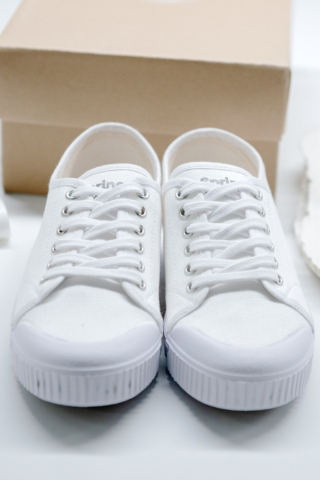
The story begins in Belleville, in the workshops of Georges Grimmeisen, who envisioned a shoe suited for playing tennis on soft clay—light, breathable, and durable. In 1936, he developed a vulcanized rubber sole that, under heat and pressure, naturally adhered to the cotton canvas without glue. This technical innovation marked the birth of Spring Court, a name that evokes bounce and lightness. The sole is distinguished by its four ventilation holes and non-slip arc patterns, aesthetic and functional signatures that remain today. With its simple and timeless design, the sneaker established itself by the late 1960s as an icon of urban style. Worn by John Lennon, Jane Birkin, and David Hockney, the G2 became a cultural reference, a symbol of effortless elegance and creative freedom.

A Living Family Legacy

After several decades of evolution, the brand remains true to its DNA. In 2015, the Grimmeisen family took back the reins of the company, now led by the fifth generation—Florence, Laura, and Théodora. This family continuity ensures the preservation of artisanal craftsmanship passed down through generations, as well as a commitment to responsible production, staying true to the brand’s original spirit: creating timeless, durable, and comfortable canvas sneakers.

Direct Vulcanization: The Heart of Spring Court’s Craftsmanship

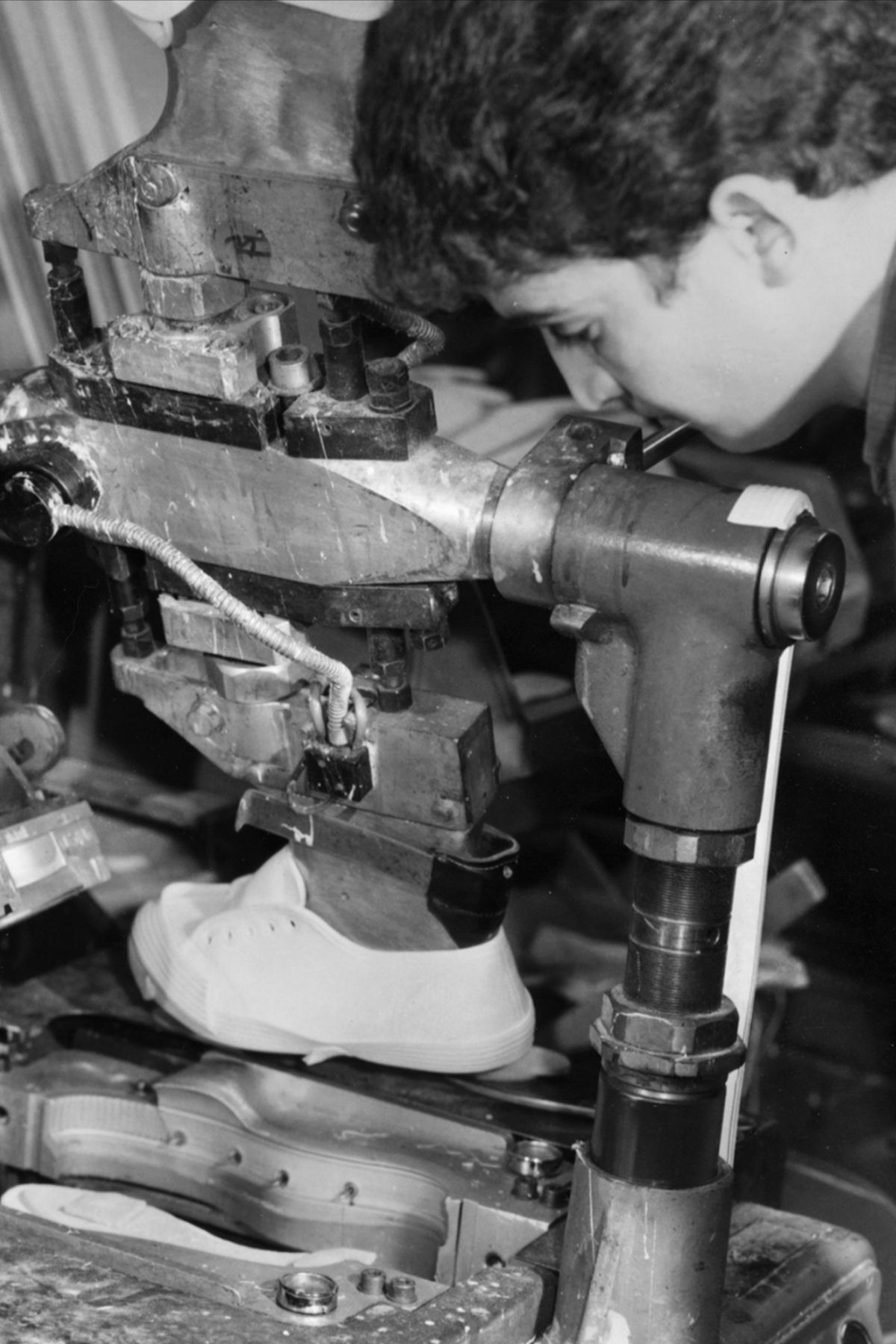
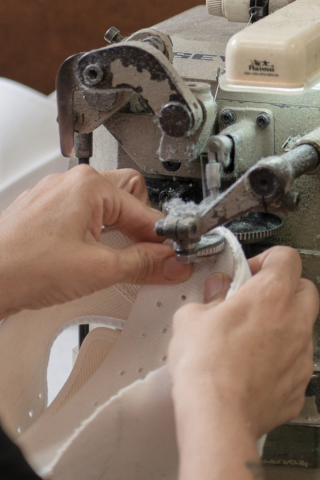
Since the 1960s, direct vulcanization has been at the heart of Spring Court’s manufacturing process. This complex technique, requiring precision and expertise, involves bonding the rubber sole and canvas upper in a single step, without glue or solvents.

The Manufacturing Steps of 
a Spring Court Canvas Sneaker

A Technical and Sustainable Process

Under the effect of heat (around 160°C) and pressure, the raw rubber transforms, becoming elastic, durable, and flexible. The material penetrates the fibers of the fabric, creating a natural and strong bond. This process ensures perfect adhesion while maintaining the lightness and flexibility characteristic of Spring Court sneakers. This technical step, the result of artisanal mastery, requires the design of specialized tools and precise knowledge of the materials. It is what gives each pair its unparalleled durability and comfort.

Handcrafted Production: Between Tradition and Precision

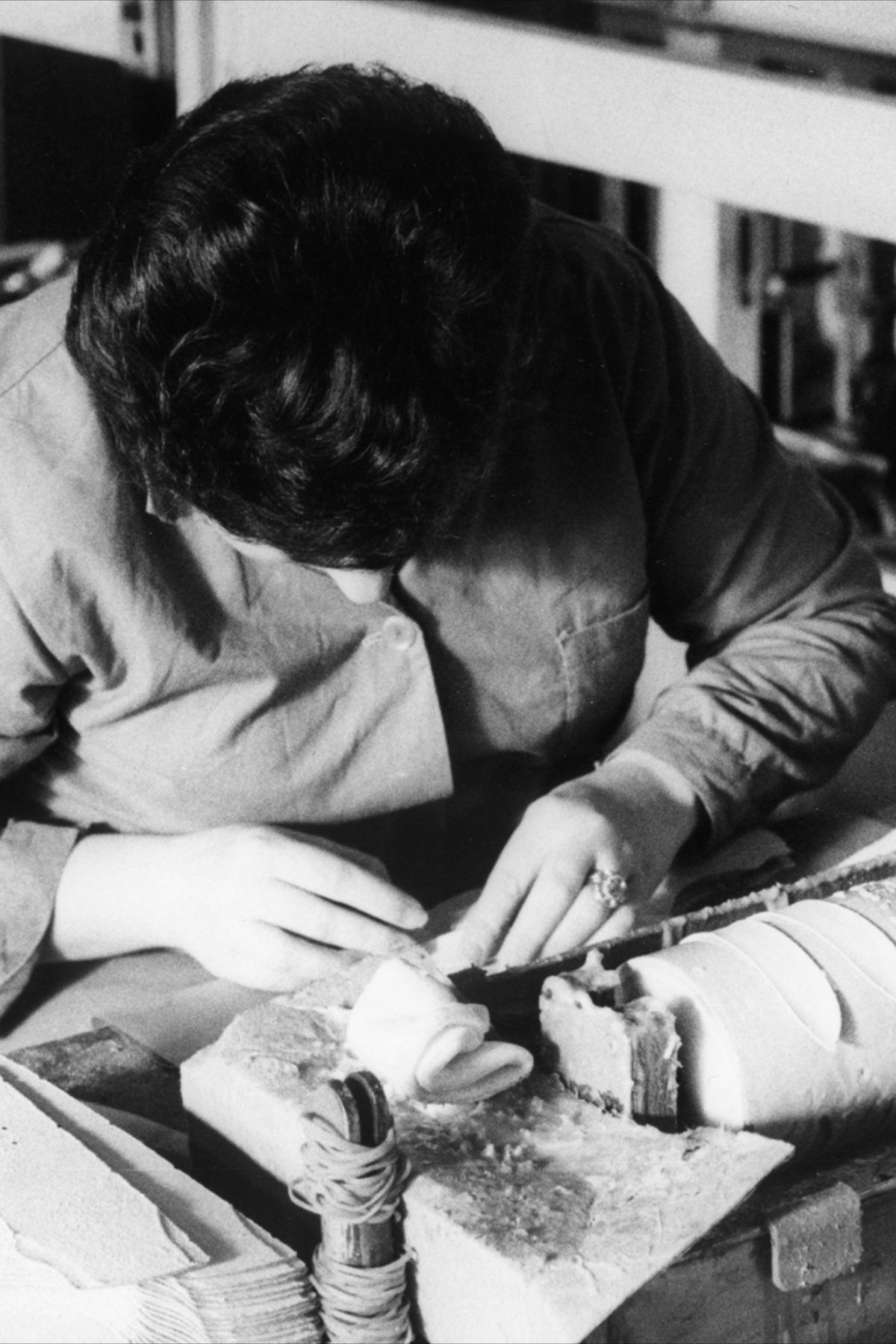
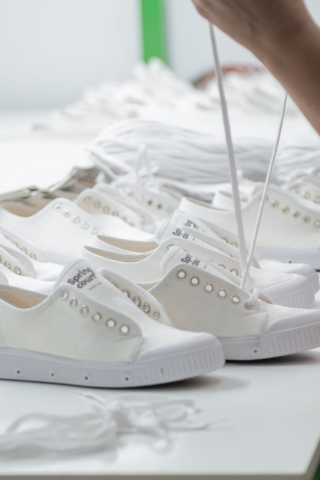
Before baking, each upper is carefully mounted on its last, and the rubber strips are applied manually around the sole. Each pair is then baked, demolded, cooled, and individually inspected. This meticulous quality control ensures the high standards the brand is known for. This combination of processes perfectly reflects the spirit of Spring Court: a sneaker that is both artisanal and industrial, where every detail matters.

Two Complementary Techniques, One Shared Commitment

To meet the needs of its markets while maintaining manufacturing quality, Spring Court distributes its production across two specialized sites:

- In Spain, where direct vulcanization is used, following the brand’s historic traditional method.

- In Thailand, where certain ranges are produced using the cold cement technique.

Cold cement is a method suited for delicate materials. Here, the term “cement” refers to bonding: the already vulcanized sole is attached to the upper using a heat-activated adhesive. This process, which requires no heat or baking, is ideal for fine leathers or modern technical materials. It allows the brand to preserve material quality while optimizing logistics for international markets such as Japan and Australia.

These two approaches complement each other perfectly: European tradition on one side, technical precision and proximity to export markets on the other. It is a balance between historic craftsmanship and contemporary adaptation.

Des matières sourcées  avec exigence

Spring Court’s timelessness goes beyond design: it is also reflected in the choice of sustainable and responsible materials.
- Leathers come from Italy or France, selected for their suppleness and quality.
- Cotton canvases are GOTS (Global Organic Textile Standard) and OEKO-TEX® Standard 100 certified, ensuring safe composition and reduced environmental impact.
- Partner tanneries comply with REACH regulations, which govern the use of chemicals in Europe.
This rigorous approach to sourcing is part of a broader commitment: to produce under the best conditions, minimize the use of chemicals, and create sneakers that last.

A Commitment to Ethics and Sustainability

Spring Court’s approach is built around a simple principle: designing sneakers that stand the test of time. Each model is created to last, to be worn, and to accompany everyday life without going out of style. Timelessness thus becomes an act of sustainability. Producing 'less but better' requires rigor across the entire value chain:
- timeless, season-free design,
- controlled manufacturing,
- thoughtful logistics, minimizing unnecessary transport through the intelligent distribution of production sites.
This coherence between aesthetics, comfort, and responsibility defines the uniqueness of Spring Court’s craftsmanship.

Timelessness as a Form of Modernity

More than just a sneaker, each Spring Court embodies a mindset. Its design has changed very little since 1936, proving that authenticity endures through the ages without losing relevance. Its clean lines, flexible sole, and functional details make it a timeless model, free from trends and seasons. This consistency is a conscious choice: one of aesthetic and technical durability, far from obsolescence and overproduction. Spring Court champions a natural, universal, and responsible elegance.

A Craftsmanship Passed Down and Alive"

Today, sisters Florence, Laura, and Théodora Grimmeisen continue their ancestor’s vision. They embody a renewal that remains true to the brand’s essence: preserving the best of tradition while integrating contemporary demands for sustainable development. At Spring Court, every sneaker tells a story: of a gesture, a material, and a culture of detail. Between technical innovation and artisanal heritage, the brand continues to forge its path, at the intersection of style and responsibility.

In Conclusion

For 90 years, Spring Court has upheld a single conviction: true modernity lies in mastering time. Its canvas sneakers are the expression of this rare craftsmanship, combining comfort, durability, and understated elegance. Through direct vulcanization and a rigorous selection of materials, the brand demonstrates that style, technical expertise, and ethics can go hand in hand. A model of both consistency and innovation, offering a valuable lesson: sometimes, staying true to your craftsmanship is the surest way to be truly modern.